




How to Choose a Rhythmic Gymnastics Ball
The Complete Sizing and Brand Guide
Everything you need to know about picking the right RG ball for training and competition
Whether your gymnast is about to buy their very first ball or upgrading to a competition-grade model, choosing the right rhythmic gymnastics ball matters more than most parents realise. The wrong size affects technique. The wrong material affects grip. And an unapproved ball can mean disqualification at competition.
This guide covers sizes, materials, brands, FIG approval and care, with links to every ball we mention so you can compare them side by side.
Shop all RG ballsShop Chacott balls
What size rhythmic gymnastics ball do I need?
Rhythmic gymnastics balls come in two main sizes, determined by the gymnast's age and competition level.
Junior balls (15–17 cm)
Junior rhythmic gymnastics balls measure between 15 cm and 17 cm in diameter. They are designed for younger gymnasts — typically those under 10 years old or competing at preliminary and development levels. The smaller diameter and lighter weight make them easier for small hands to control during rolls, throws and catches.
If your gymnast is aged 7 or younger, a 15–16 cm ball is usually the right size. Gymnasts aged 8–10 may use a 16–17 cm ball depending on hand size and what their coach recommends.
Senior balls (18–18.5 cm)
Senior balls measure 18 cm to 18.5 cm in diameter and weigh at least 400 grams. This is the competition size set by the FIG (International Gymnastics Federation) Apparatus Norms, which British Gymnastics follows for Pre-Junior, Junior and Senior competition.
Once a gymnast moves beyond beginner level — usually around age 10–11 — they move to a senior-sized ball. Training with the correct size from an early stage builds the muscle memory and handling skills needed for competition.
Quick sizing reference
| Age / Level | Ball diameter | Ball weight | When to use |
|---|---|---|---|
| Under 7 / beginner | 15–16 cm | ~300 g | First ball, recreational classes |
| 8–10 / development | 16–17 cm | ~350 g | Club training, first competitions |
| 11+ / competition | 18–18.5 cm | 400 g minimum | All serious training and competition |
Tip: If your gymnast is between sizes, check with their coach. Many coaches prefer gymnasts to grow into the competition size rather than build habits with an undersized ball.
Junior balls (17 cm)
CHACOTT GYM Ball for Juniors – 17 cmCHACOTT PRISM Ball for Juniors – 17 cmSASAKI Middle Ball – 17 cmAMAYA Ball PEARLY for Juniors – 17 cm
Senior balls (18–18.5 cm, FIG-approved)
CHACOTT GYM Ball – 18.5 cmCHACOTT PRISM Ball – 18.5 cmSASAKI GYM STAR Ball – 18.5 cmPASTORELLI New Generation – 18 cm
See all junior and senior balls
What are rhythmic gymnastics balls made of?
Modern RG balls are made from high-quality rubber or synthetic rubber compounds. The material needs to achieve a specific balance: enough grip that the ball does not slip during body rolls, enough bounce for controlled throws, and enough durability to withstand daily training on competition carpet.
The surface finish varies by model:
- Uni-colour / matte — Classic solid colours with a smooth rubber finish. Chacott's GYM ball, Sasaki's GYM STAR and Pastorelli's New Generation are examples.
- Metallic and pearl — Fine metallic or pearlescent particles in the rubber create a reflective sheen. Sasaki's Metallic and Magnetic lines and Amaya's Pearly balls use this kind of finish.
- Prism, shiny and colour-shift — Finishes that change colour or catch the light as the ball rolls. Chacott's PRISM and SHINY balls and Sasaki's Aurora and Meteor sit here.
- Glitter — Glitter particles mixed into or applied onto the rubber. Pastorelli's Glitter and Shaded Glitter balls are among the best known.
The finish shapes how the ball reads to judges and audience under competition lighting, and each brand's rubber and surface has its own feel in the hand. Many gymnasts choose a ball colour that complements their leotard and music for a cohesive presentation.
Ball brands compared
We stock five brands, all trusted at the highest levels of the sport. The choice often comes down to feel, finish and budget.
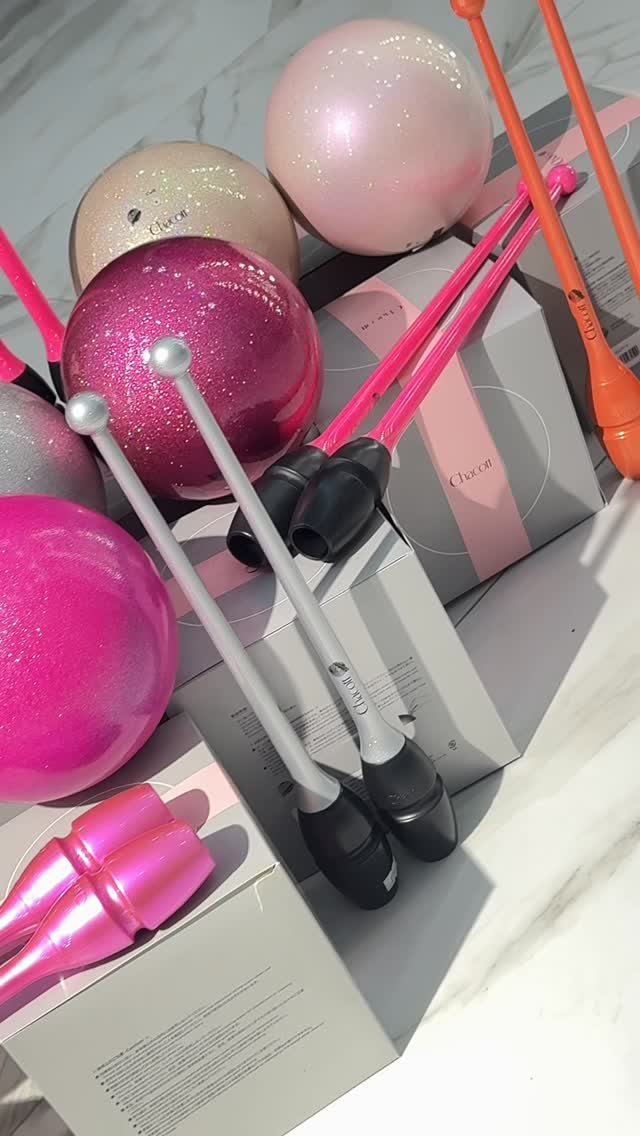
Chacott
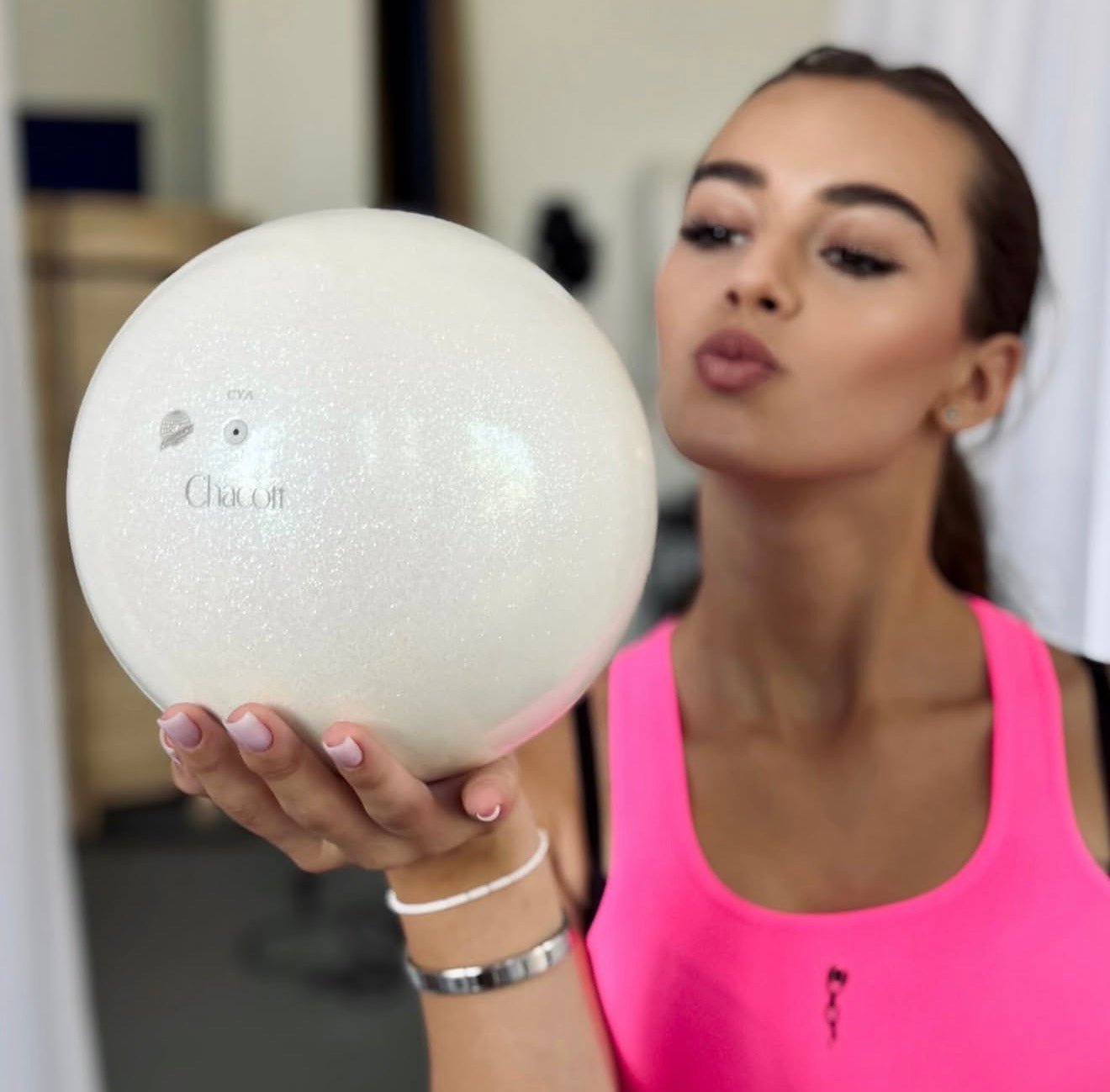
Chacott is a Japanese brand that has made rhythmic gymnastics apparatus for decades, and its balls are FIG-approved at senior size. Gymnamo is an official Chacott distributor for the UK and Ireland, so we buy direct from Chacott in Japan and hold the range in stock here.
Chacott's range covers three styles:
- GYM ball — solid colours, in junior 17 cm and FIG-approved 18.5 cm.
- PRISM ball — Chacott's light-catching PRISM finish, in junior 17 cm and FIG-approved 18.5 cm.
- SHINY ball — a high-gloss finish, FIG-approved 18.5 cm.
How Chacott compares on price: like-for-like, Chacott balls are priced just below the equivalent Sasaki models, in both junior and senior sizes. Against Pastorelli, Chacott's solid-colour GYM balls sit between Pastorelli's New Generation and its Glitter range. See the price table below.
CHACOTT GYM Ball – 18.5 cmCHACOTT PRISM Ball – 18.5 cmCHACOTT SHINY Ball – 18.5 cm
Sasaki
Sasaki is a Japanese brand with a long history in rhythmic gymnastics. Its balls are known for excellent grip and distinctive colour options — the Meteor, Aurora, Magnetic and Metallic lines feature striking metallic and colour-shift effects. Sasaki senior balls measure 18.5 cm and are FIG-approved, and the brand is a favourite among competitive gymnasts worldwide.
Pastorelli
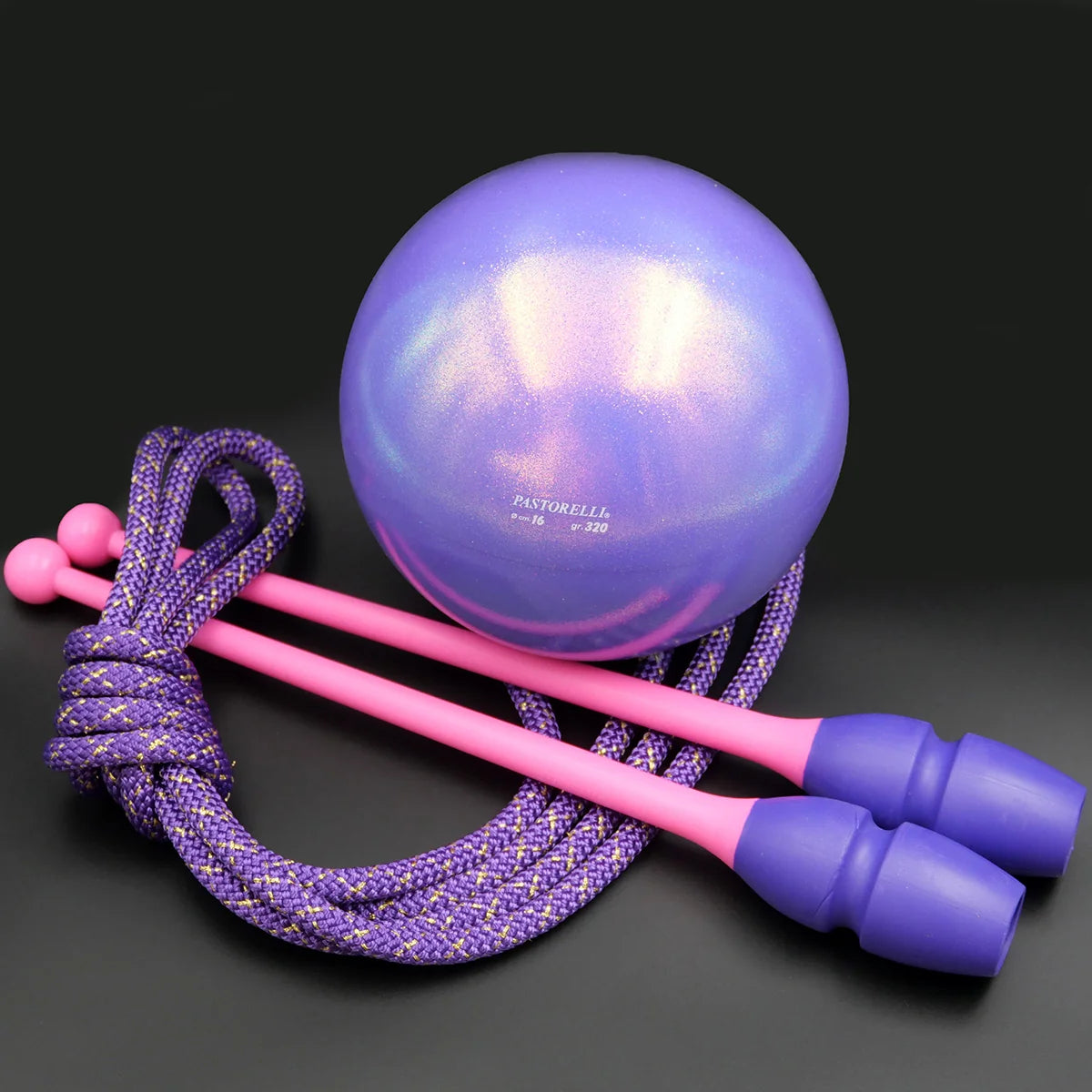
Pastorelli is an Italian brand and one of the most widely used in RG. Its range spans uni-colour (New Generation), glitter and shaded glitter finishes, known for reliable grip, consistent bounce and good shape retention. Pastorelli senior balls measure 18 cm and are FIG-approved where stated.
Amaya
Amaya is a Spanish manufacturer offering competition-grade balls at a lower price point, including the Pearly and Holoscent ranges. Its 18 cm FIG-approved balls are a popular choice for gymnasts who want an approved ball at an accessible price.
Venturelli
Italian brand Venturelli produces the Star Line and Silver Line balls, both FIG-approved at 18 cm, known for vibrant colours and a good balance of grip and durability.
Price guide by ball type
| Type | Chacott | Sasaki | Pastorelli | Amaya / Venturelli |
|---|---|---|---|---|
| Junior (17 cm) | £45–£70 | £52–£80 | — | from £25 |
| Senior, solid colour (FIG) | around £46 | around £55 | around £35 | £30–£50 |
| Senior, colour effect, glitter or metallic (FIG) | £85–£90 | around £90 | £73–£77 | around £45 |
Typical prices, October 2026. Exact prices are on each product page.
Does my gymnast need a FIG-approved ball?
It depends on the competition:
- British Championships and international (FIG) events — yes. Apparatus is checked and must carry the manufacturer's logo and the "FIG approved" logo.
- Other British Gymnastics competitions — for Pre-Junior, Junior and Senior gymnasts, the ball must meet the FIG Apparatus Norms (size and weight). A FIG-approved ball is the simplest way to be sure, and judges can ask to check apparatus at any competition.
- Espoir, Pre-Espoir and recreational levels — the rules are relaxed: the ball should suit the gymnast's size, so a good junior ball from any reputable brand is fine.
Rules differ between competitions and home nations, so check the event rules or ask your coach before buying.
When shopping, look for "FIG-approved" in the product name or description. Senior-sized balls from Chacott, Sasaki, Pastorelli, Amaya and Venturelli are FIG-approved, but not every colour or junior size carries the certification — always check.
Shop FIG-approved senior balls
How to care for your rhythmic gymnastics ball
A good ball is an investment, and proper care extends its life significantly.
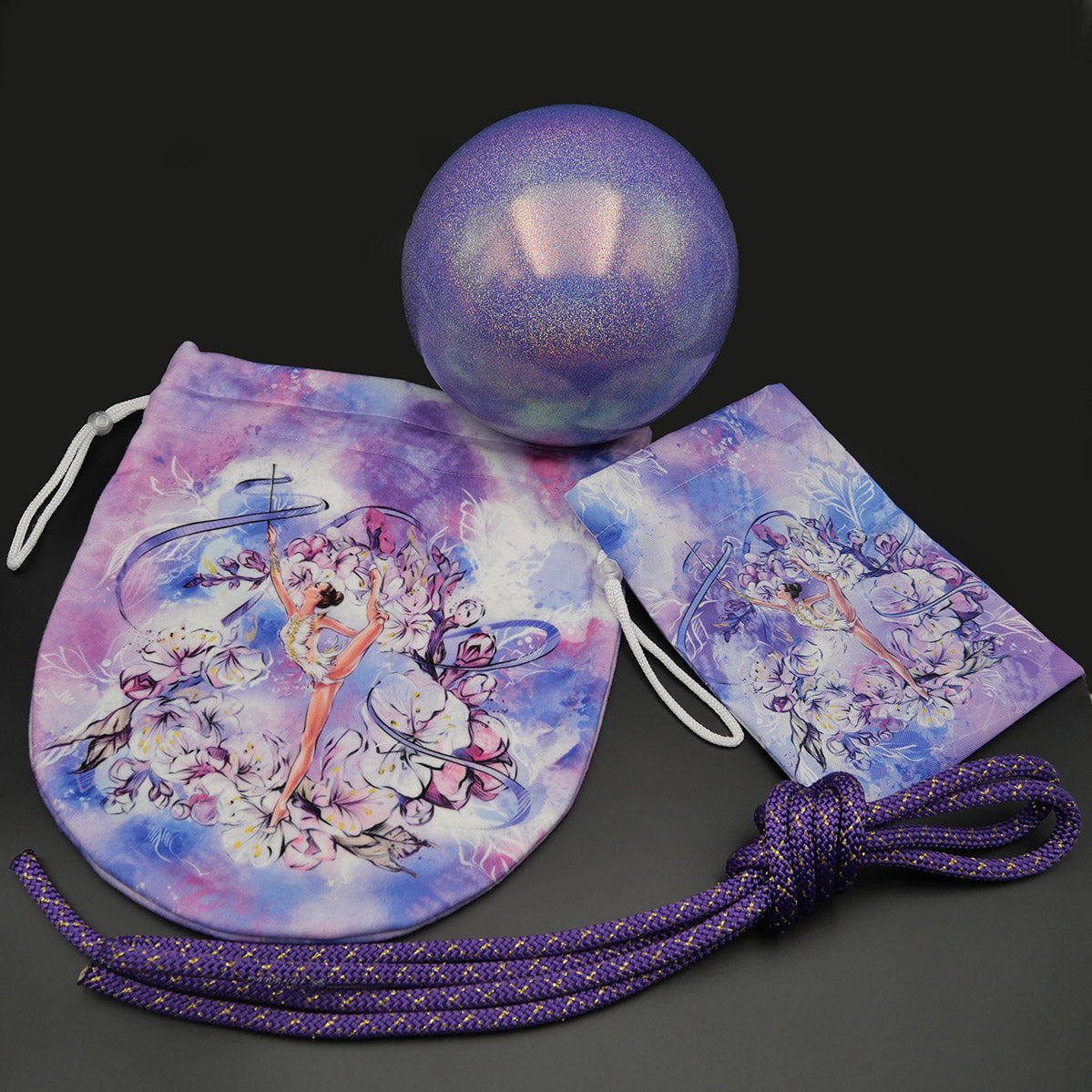
Storage: Always store your ball in a protective ball cover when not in use. This prevents scuffs, scratches and colour transfer from other items in your kit bag. Store at room temperature (roughly 3°C to 25°C) and avoid leaving the ball in a hot car or direct sunlight.
Inflation: Only inflate your ball using the hand pump recommended by the manufacturer. Before inserting the needle, apply ball smoother (a silicone-based grease) to the valve needle — inserting a dry needle can damage the valve and void your warranty. Do not over-inflate; the ball should match its stated diameter and give very slightly when pressed.
Deflation for storage: When storing your ball for more than a few days, deflate it slightly. This reduces pressure on the seams and helps the ball keep its shape. Never store or transport a ball completely deflated.
Cleaning: Wipe the ball with a soft cloth dampened with warm, soapy water. Avoid solvents, alcohol-based cleaners or abrasive cloths. Dry thoroughly before returning it to its cover.
Surface use: Only use your RG ball on proper rhythmic gymnastics carpet. Using it on rubber floors, linoleum, concrete or outdoor surfaces will damage the surface finish and void the warranty.
What else do I need to buy with a ball?
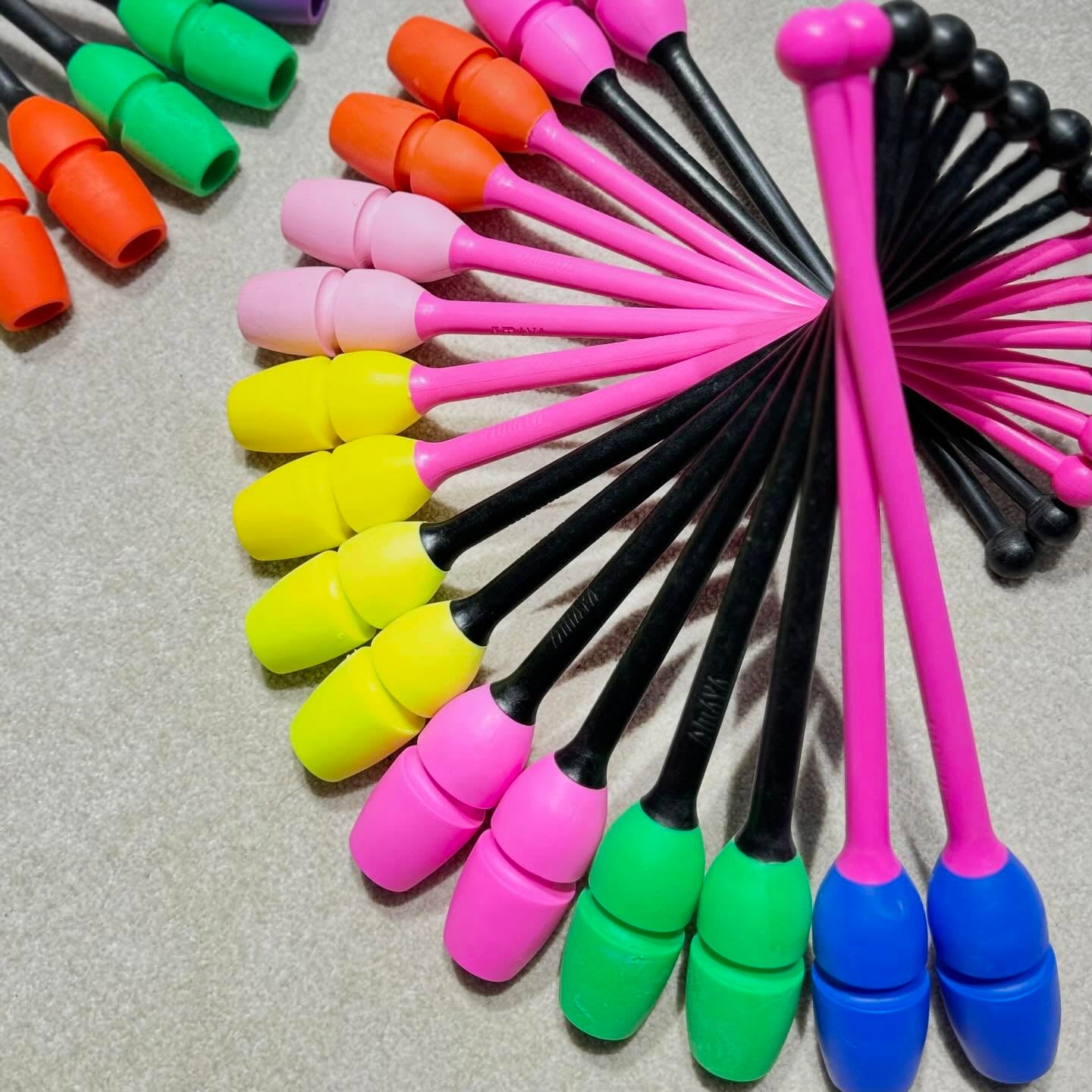
- Ball cover — protects against scratches during transport.
- Ball pump — use the pump from the same brand as your ball where possible: Chacott balls with a Chacott pump, Sasaki balls with a Sasaki pump.
- Ball smoother / valve grease — a small tube of silicone grease to protect the valve during inflation.
- Cleaning cloth — a soft microfibre cloth for wiping the surface after training.
Ball coversChacott ball pumpSasaki ball pumpBall smootherCleaning cloth
Ordering for a club or group?
Group routines need five matching balls. If you are ordering for a squad, get in touch and we will help you put together a matching set, including Chacott balls, at our club price.
Ready to choose?
We stock junior and senior balls from Chacott, Sasaki, Pastorelli, Amaya and Venturelli. Most orders are dispatched within 1–2 working days from our UK base.
Shop all RG ballsShop Chacott balls
Not sure which ball is right for your gymnast? Get in touch — we are always happy to help.